But I’m Here. I Survived.
In April 2024, I underwent ACL reconstruction surgery after rupturing my ACL.
About a week after surgery, I started feeling pain in my back.
I brushed it off, assuming it was from sleeping differently since I had to keep my leg straight and had been sleeping on my back.
The Next Morning
The next morning, the pain was worse.
Every time I took a breath, it intensified.
Soon, I found myself struggling to breathe, and the pain became severe enough that I rushed to the hospital.
Bilateral Pulmonary Embolisms
After what felt like a million tests in the ER, doctors discovered I had bilateral pulmonary embolisms — blood clots in both lungs.
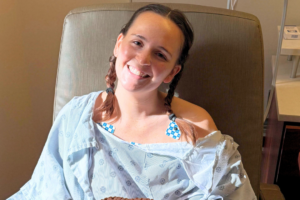
I was immediately admitted to the hospital, where I spent a week fighting to breathe, get my levels normal, and just in general recovery.
I also learned that the clot had caused damage to my right lung.
A week in the hospital was incredibly difficult.
I was already recovering from major knee surgery, and now I was dealing with severe lung pain and the reality of a life-threatening condition.
What Should Have Been Different
Before my ACL surgery, bloodwork had revealed that I have Factor V Leiden, a genetic blood clotting disorder.
I brought up the Factor V Leiden to all doctors prior to the surgery and expressed that I had been concerned.
They all disregarded it and said it shouldn’t be an issue with my knee surgery.
I feel I should have been prescribed blood thinners post surgery but instead was told to take a baby aspirin.
The pulmonary embolisms were ultimately a result of this.
The Setbacks That Followed
Because of the clots, my ACL recovery was filled with setbacks.
My rehabilitation was delayed, and seven months later, I had to undergo a second knee surgery after doctors confirmed my lungs were healthy enough.
Because of my stay in the hospital, my knee had too much scar tissue so I had to have a second surgery so I could walk and bend my knee normally.
Today, I am on permanent blood thinners.
The Mental Trauma
While my body has healed, the mental trauma has been the hardest part.
Surviving something like this changes the way you think about your health.
I often find myself worrying that something might be wrong.
I’m more aware though now.
But I’m here. I survived, and that’s something I’ll never take for granted.
What I’ve Learned
I’ve learned all the signs of a potential clot.
I’ve learned how common, but also treatable some clots are — but also how deadly some can be.
I’ve learned I was one of the lucky ones and to not take anything for granted anymore.
My mom, sister, and nephews all have Factor V Leiden.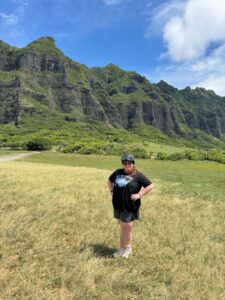
What I Want Others to Know
Don’t wait!
If you feel or show any signs of clotting symptoms, immediately go to the hospital.
It’s not worth it to wait and see if it’s nothing.
The ER doctors told me my story could have been drastically different if I had waited another 30 minutes.