Better Safe Than Sorry
In February 2022, I took a quick trip to Florida from New York — a simple three-hour flight each way.
A few days after I returned home, I started to notice a pain in my upper back.
I assumed I had pulled a muscle.
My doctor agreed it was likely muscular, so I treated it as such, expecting it to improve.
It Got Worse
Over the next 10 days, it got worse.
The pain began to feel different — deeper.
It radiated from my back through to my chest.
I then noticed pain when I took a deep breath and I knew something was not right.
Listening to My Instincts
I called my doctor again and asked to be seen.
Even then, my doctor was not worried — I was 30 years old and otherwise healthy.
I was told it was likely just muscular.
I was “too young” for anything to be seriously wrong!
But to be cautious, she ordered bloodwork.
The next day, I received a call that my D-dimer was elevated and I needed to go to the ER.
Three Blood Clots
A CT scan confirmed I had three blood clots in my lungs.
Within minutes, I was given a blood thinner shot and admitted overnight.
Thankfully, I was discharged the next day to continue recovery at home on blood thinners.
The Perfect Storm
The following week, I met with a hematologist and a full workup revealed I have a Prothrombin Gene Mutation — a genetic condition that increases the risk of blood clots.
The recent flight, birth control pills, and my genetics were believed to have created the perfect storm.
My mom has a gene mutation too — discovered after my diagnosis.
The Anxiety That Followed
The physical pain gradually improved, but the anxiety did not.
For a long time every unfamiliar ache or pain sent me spiraling — even sending me back to the ER because I was constantly questioning whether it was happening again.
Nearly Four Years Later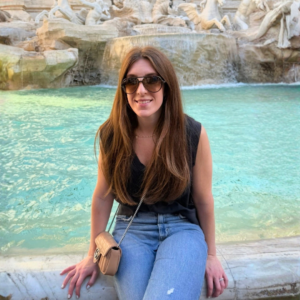
This experience was life changing.
Nearly four years later, I’ve learned how to live with the diagnosis and I’m so grateful because it could have been much worse.
Yes completely — there will always be a worry or fear, but I know my risks and I take precautions.
I’m happy to not be on daily blood thinners, but I work closely with my hematologist to take precautions, especially when traveling.
I don’t think I will ever not worry about having another clot — but I know my risks now and will never ignore or dismiss unusual symptoms.
Joining the monthly NBCA talks really helps to keep me informed and to hear similar stories.
What I Want Others to Know
Never ignore your symptoms.
Always speak up when something is wrong.
Always get checked out — better safe than sorry!