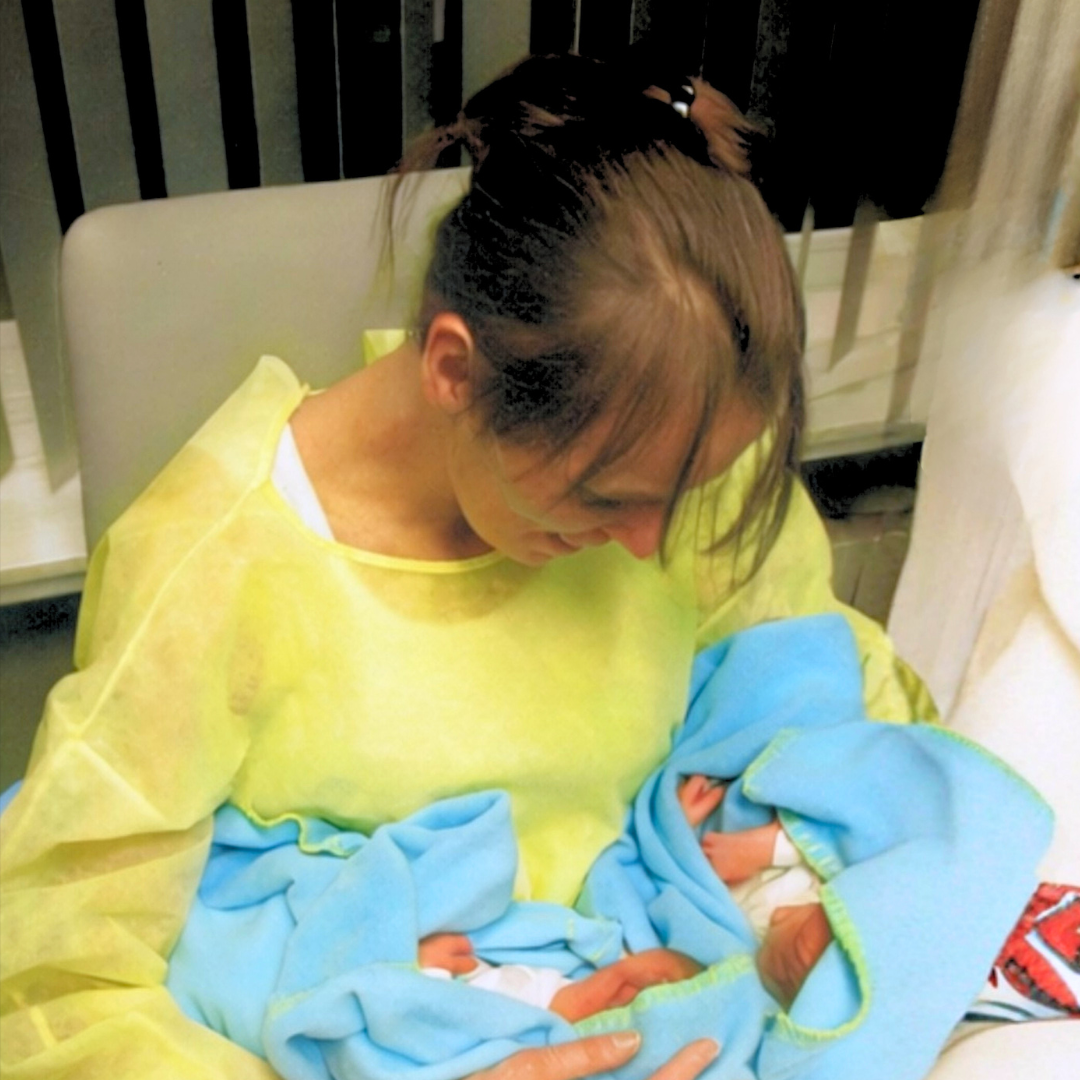
In February 2014, shortly after giving birth prematurely to my twin sons at the age of 34, I developed severe back pain. For about a week, I continued to go about my daily activities despite the symptoms. The pain and swelling were especially severe during physical activity and less noticeable at rest.
Within days, my left leg became swollen, discolored, and extremely painful. Walking became nearly impossible.
At the emergency department, I described the pain as “as bad as childbirth.” The diagnosis was life-threatening: an extensive deep vein thrombosis (DVT) that had extended up to the vena cava above my kidneys. I also had bilateral pulmonary embolisms and a pulmonary infarction.
Due to the life-threatening severity of the clot, I required a thrombectomy.
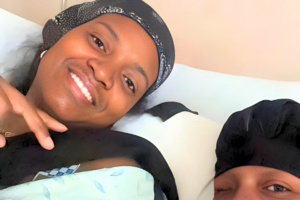
I was hospitalized for two months and confined to a wheelchair because of the severity of the thrombosis. During this time, my premature twins remained in the hospital as well. The emotional impact was overwhelming — facing a life-threatening condition while trying to be there for my newborn children.
After discharge, I received short-term anticoagulation with rivaroxaban with follow-up at 3 days and 3 weeks, after which the medication was discontinued.
Although recent scans show no visible damage from the embolisms or infarction, the long-term consequences remain. Today, I live with COPD and emphysema (FEV1 around 62%), heart failure, and severe spinal problems (kyphosis, scoliosis, and Scheuermann’s disease). These conditions cause chronic fatigue, reduced physical capacity, and daily pain.
Despite this, I care for my three children, all of whom have autism and intellectual disabilities. This creates a constant physical and emotional burden, often beyond my limits.
This experience has completely changed my life. I went from being a healthy young mother to someone living with chronic illness and limitations. My limits are permanently lower than what my situation requires.
I learned to take my body seriously and not ignore symptoms. Pain can be misleading and worse with activity. Early action is crucial. Blood clots can become life-threatening quickly, especially during or after pregnancy.
Do not ignore persistent pain or swelling, especially after pregnancy. Seek medical help and keep pushing if something feels wrong. Blood clots can escalate quickly, even in young and otherwise healthy people.
Resources: