
Women’s Health Month 2026
PROTECT THE WOMEN YOU LOVE
Blood clots impact women throughout their lifetime—adolescence and young adulthood, reproductive years, midlife, and older adulthood—yet too often, the signs are missed, symptoms are minimized, and diagnoses come too late.
The women in your life — your mother, daughter, partner, sister, friend — deserve to be protected.
👉 This Women’s Health Month: Donate in her honor🌸and send a custom eCard.

Learn the signs. Know the risks. Share the message. Take action to protect the women you love.
WHY THIS MATTERS
Blood clots are a leading cause of preventable death in the United States.
Yet in women, they are often missed, minimized, or misdiagnosed.
- Up to 900,000 Americans are affected each year
- As many as 100,000 lives are lost annually
- Blood clots are a leading cause of maternal death
- Many cases are preventable—especially in healthcare settings
- Women’s symptoms are more likely to be overlooked or attributed to less serious causes
Recognizing the signs and speaking up can save your life — or the life of a loved one.
RISK FACTORS ACROSS A WOMAN’S LIFETIME
Adolescence and Young Adulthood
- Hormonal birth control (estrogen-containing pills, patch, or ring)
- Early use of injectable contraception
- Obesity, even at a young age
- Undiagnosed inherited clotting disorders (e.g., Factor V Leiden, Prothrombin gene mutation)
- Smoking combined with hormonal contraception significantly amplifies risk
Reproductive Years
- Pregnancy — risk is 5x higher than in non-pregnant women of the same age
- Postpartum period — the highest-risk window, especially the first 6 weeks after delivery
- C-section delivery increases risk compared to vaginal birth
- Multiple or closely spaced pregnancies
- Preeclampsia and other pregnancy complications
- Prolonged bed rest during pregnancy
- IVF and assisted reproductive technologies (ovarian hyperstimulation)
- Recurrent miscarriage (may signal antiphospholipid syndrome)
Midlife
- Perimenopause hormonal fluctuations
- Menopausal hormone replacement therapy (HRT) — especially oral estrogen formulations
- Breast cancer treatment (tamoxifen, chemotherapy, surgery)
- Gynecologic cancers (ovarian, uterine, cervical) and their treatments
- Prolonged immobility from sedentary lifestyle or desk work
- Long-haul travel becoming more frequent
- Rising obesity risk with metabolic changes
Older Adulthood
- Age itself is an independent risk factor — risk doubles with each decade after 40
- Reduced mobility and longer recovery after surgery or illness
- Hip and knee replacement surgery (among the highest-risk elective procedures)
- Atrial fibrillation
- Cancer — both the disease and its treatments
- Heart failure
- Long-term care settings with limited ambulation
- Multiple medications and potential drug interactions
Risk Factors Present at Any Life Stage
- Personal or family history of DVT or pulmonary embolism (PE)
- Inherited or acquired clotting disorders (thrombophilia)
- Autoimmune conditions more common in women — lupus, antiphospholipid syndrome
- Inflammatory bowel disease
- Prolonged sitting (travel, desk work, hospitalization)
- Surgery or injury with limited mobility
- Dehydration
- Varicose veins
- Smoking
Download the Women’s Risk Timeline and Women’s Risk Assessment Questionnaire
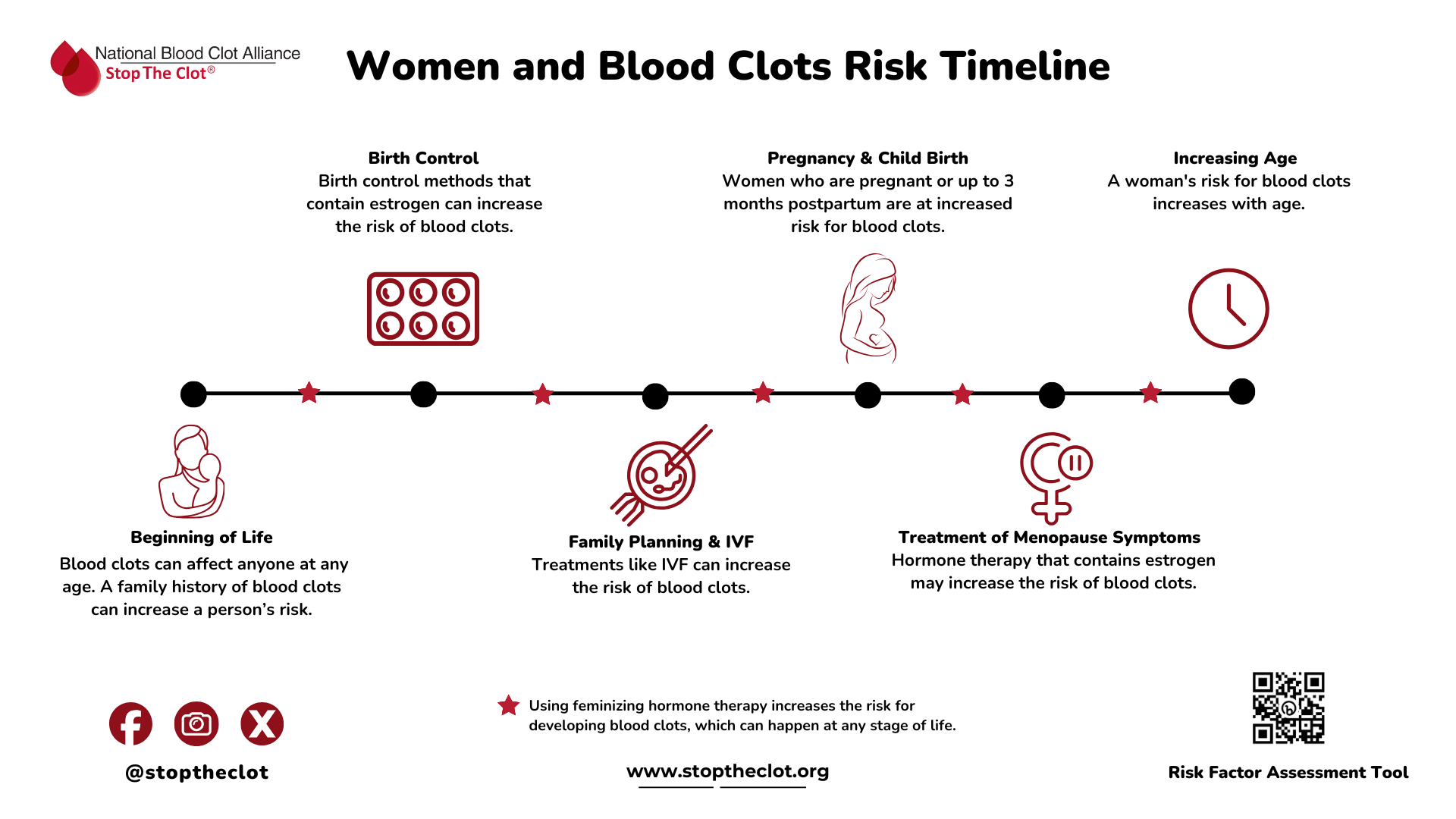
Coming Soon! NEW interactive women’s blood clot risk assessment tool.
KNOW THE SIGNS AND SYMPTOMS
Blood clots can happen to anyone—but knowing what to look for can save your life.
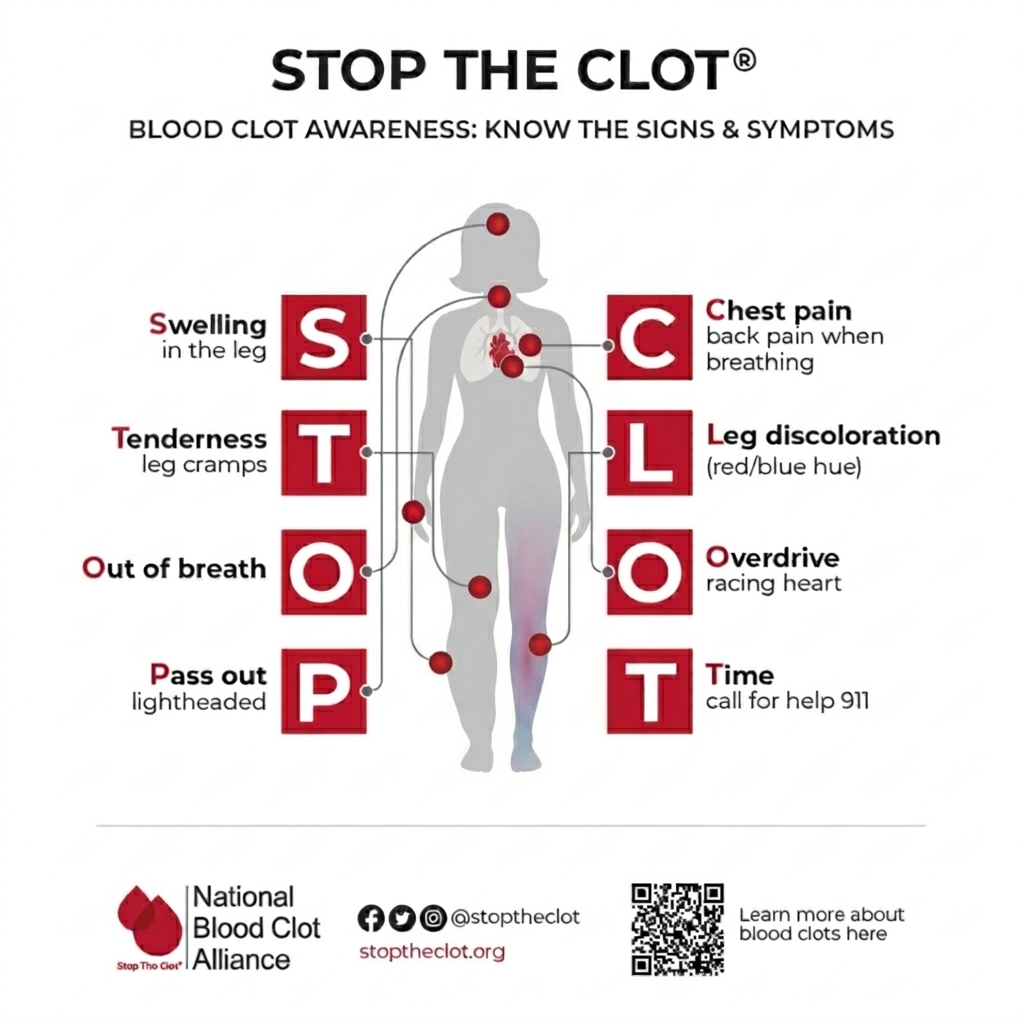
Symptoms of a blood clot depend on where it forms. The most common types are deep vein thrombosis (DVT) and pulmonary embolism (PE).
Remember: STOP THE CLOT®
Swelling in the leg
Tenderness leg cramps
Out of breath
Pass out lightheaded
Chest pain back pain when breathing
Leg discoloration red/blue hue
Overdrive racing heart
Time call for help 911
IN HER OWN WORDS…
Behind every statistic is a real woman, a real story, and a moment that changed everything.
Six Women. Six Stories. One Mission.
All month long we will be sharing the video stories of six remarkable women who trusted us with their most personal moments. Survivors who fought their way back. Mothers and loved ones who lost someone far too soon and turned their grief into a lifelong mission to make sure other women don’t suffer the same fate. These stories are raw, real, and remind us why awareness can’t wait.
- Heather Beissel is sharing her story after developing a postpartum CVST blood clot and facing multiple misdiagnoses before finally getting answers:
Five more stories COMING SOON!
NEWS AND EVENTS
May PEP Talk: What Women Need to Know About Blood Clots
📅 Tuesday, May 12 at 7 PM ET
🔗 Register here
Mississippi Blood Clot Awareness Bus Tour: May 15-25, 2026
Learn more about the tour.
Breaking News: Upcoming Launch of the Women and Blood Clots Virtual Institute
👉Read the Press Release
ADDITIONAL RESOURCES
- Stop the Clot, Spread the Word® Pregnancy Resources
- Women’s Patient Stories
- May Podcast Episode COMING SOON!