
Blood Clot Info: Risks, Symptoms, Treatment & Prevention
Blood Clot Info: Know Your Risk, Recognize Symptoms, and Prevent Blood Clots
A blood clot (venous thromboembolism, or VTE) occurs when blood thickens and clumps inside a vein — most often in the leg, called deep vein thrombosis (DVT), or in the lungs, called pulmonary embolism (PE). Blood clots affect about 900,000 Americans every year and kill up to 100,000 — yet most are preventable and treatable when caught early.
Who is at Risk for Blood Clots?
Blood clots do not discriminate. They affect people of all ages, races and genders. One of the most important things you can do to prevent blood clots is to know if you are at risk. The risk factors for blood clots include:
- Hospitalization for illness or surgery
- Major surgery, particularly of the pelvis, abdomen, hip, knee
- Severe trauma, such as injuries from a car crash
- Injury to a vein that may have been caused by a broken bone or severe muscle injury
- Hip or knee replacement surgery
- Cancer and cancer treatments
- Use of birth control methods that contain estrogen, such as the pill, patch or ring
- Pregnancy, which includes the postpartum period (six weeks after the baby is born)
- The use of hormone replacement therapy containing estrogen
- Family history of blood clots
- Obesity
- Confinement to bed or wheelchair
- Sitting too long, such as during air travel or road trips
- Smoking/vaping
- Age 55 or older
- Long-term diseases such as heart and lung conditions, or diabetes
What Are the Symptoms of a Blood Clot?
There are several important signs and symptoms of blood clots. If you can recognize these signs and symptoms, you can save your life or the life of a friend or family member.
Symptoms of a Blood Clot in the Leg or Arm (deep vein thrombosis or DVT)
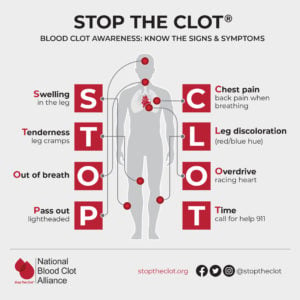
A DVT in the leg typically causes swelling in one leg, cramping pain that feels like a persistent charley horse, warmth, and reddish or bluish skin discoloration. If you notice these symptoms, contact your doctor as soon as possible.
-
Swelling
- Pain or tenderness not caused by injury
- Skin that is warm to the touch
- Redness or discoloration of the skin
If you have these signs or symptoms, alert your doctor as soon as possible.
Learn more about how DVT is diagnosed: How is DVT diagnosed?
Symptoms of a Blood Clot in the Lung (pulmonary embolism or PE)
A PE typically causes sudden shortness of breath, sharp chest pain that worsens when you breathe deeply or lie down, coughing (sometimes with blood), and a rapid or irregular heartbeat. If you experience these symptoms, seek emergency care right away.
- Difficulty breathing
- Chest pain that worsens with a deep breath or lying down
- Coughing, or coughing up blood
- Faster than normal or irregular heartbeat
Seek immediate attention if you experience these signs or symptoms.
Learn more about how PE is diagnosed here: How is PE diagnosed?
Blood Clot Awareness Stop the Clot® Acronym
Share our Blood Clot Awareness Stop the Clot acronym to highlight the signs and symptoms of blood clots. Knowing can save your life or the life of someone you know. Download a PDF version here.
Black Populations and Blood Clots
Black or African American people have up to 60% higher rates of life-threatening blood clots than white people.
- Studies have shown that Black people have higher blood clot mortality rates than any other group.
- Black women face higher rates of maternal mortality connected to blood clots during pregnancy and in the three months after giving birth.
More information on Black populations and blood clots here.
How Can You Prevent Blood Clots?
Blood clots are preventable and can be safely treated. You can reduce your risk by learning some of the best ways to protect yourself from life-threatening blood clots:
- Know your risk factors for blood clots
- Recognize the signs and symptoms
- Tell your doctor if you have any blood clot risk factors
- Before any surgery, talk with your doctor about blood clot prevention
- See your doctor as soon as possible if you do have any symptoms of a blood clot
- Get up and move every few hours if you’ve been sitting for a long time or traveling by plane, train, or car
- Maintain a healthy weight
- Don’t smoke/vape, or take steps to quit
How Are Blood Clots Treated?
Find a Doctor
Finding a healthcare professional who understands the complexities of blood clotting is one of the most important decisions you’ll make if you’ve been diagnosed with blood clots or if you think you may be at risk. If you need help finding a doctor who specializes in blood clots or blood clotting disorders, visit here: Find A Doctor Resources
Blood Clot Treatment
The prevention and treatment of blood clots primarily involves the use of anticoagulants, also known as blood thinners. These medications do not actually “thin” the blood. They slow the body’s ability to form new clots and keep existing ones from getting bigger. Learn more about blood clot treatment here: Blood Clot Treatment.
Get More Life-Saving Information to Share
Stop the Clot, Spread the Word™
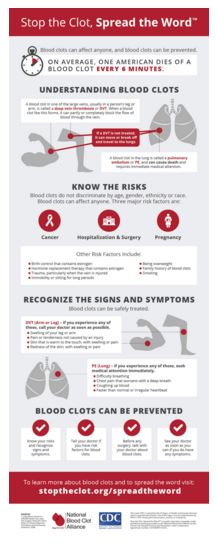
You’ll find great information, including important downloadable checklists that you can share at Stop the Clot, Spread the Word™.
Share our infographic as a guide to information about risk factors, signs/symptoms, and prevention and watch our short video with the most important blood clot info people need to know.
Women and Blood Clots
Help women understand the blood clot risks connected to several important life stages, including birth control and family planning, pregnancy and childbirth and the treatment of menopause symptoms.
Share our Women and Blood Clots Infographic with the women you know.
Recovery and Peer Support
Peer Support
- A blood clot diagnosis can be devastating, but you’re not alone. Join our Facebook support group and connect with other blood clot survivors.
- Every month, we offer a live, one-hour webinar that includes topics of interest to blood clot survivors and expertise from medical leaders in hematology, vascular medicine, pulmonology and more. Explore our PEP Talk library and register for upcoming sessions.
- In 2023, we launched an original podcast, Taking a Breath. Each episode explores the blood clot story and includes input from medical experts. Listen here or wherever you get your podcasts.
Personal Stories
Personal storytelling about blood clots makes an impact. For more than 15 years, NBCA has been giving blood clot survivors a platform to tell your blood clot stories, which we share on our website, on social media, in our educational programs. You can read these stories here: Patient Stories
If you’re a blood clot survivor or the loved one of a person lost to blood clots, we welcome your stories.
Share My Story
Share My Loved One’s Story