What Jalen Hurts’ Blood Clot Can Teach Us All
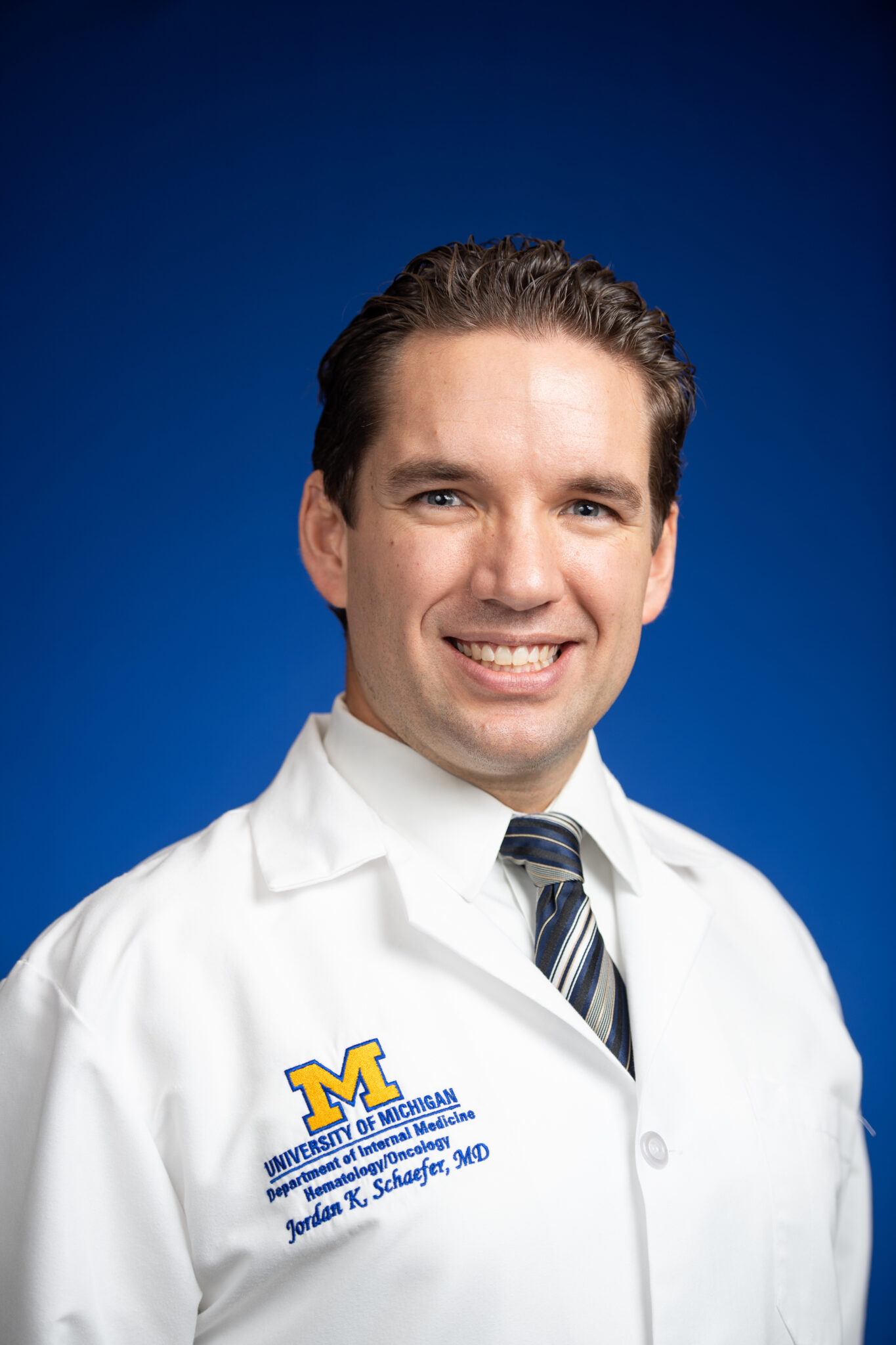
By Dr. Jordan Schaefer, Hematologist, University of Michigan Health
When news broke that Philadelphia Eagles quarterback Jalen Hurts had been sidelined with a superficial blood clot, the diagnosis raised questions about what a superficial clot is. Superficial. The word sounds reassuring — minor, even inconsequential. As a hematologist who specializes in blood clots, I often explain that “superficial” describes where a clot is located—not how seriously it should be taken.
What We Know
A superficial venous thrombosis, or SVT, is a clot that develops in a vein near the skin’s surface. It often appears as a red, warm, tender streak along the leg. It differs from the clot most people fear: deep vein thrombosis, or DVT, which forms in larger veins farther below the surface. DVT is dangerous in part because it can give rise to a pulmonary embolism—a clot that travels to the lungs and can be fatal.
In a high-impact sport like football, trauma is an important clinical consideration. A direct blow can set off a chain reaction—inflammation, injury to the vessel wall and activation of the clotting system—that may culminate in a clot forming at the site. Clinicians have long recognized the connection between blunt injury and clot formation. In any individual case, however, it can be difficult to determine whether trauma caused a clot or aggravated one that was already present.
The Part That Surprises People
For years, SVT was treated as little more than an inconvenience—something to manage with heat and ibuprofen until it resolved. We now understand that the condition can carry meaningful risks. Studies have found that some patients with SVT also have an undetected DVT. In addition, clots near the point where superficial and deep veins converge can extend into the deeper system, increasing the risk of serious complications.
For patients with higher-risk superficial clots—based on the clot’s length or location, or on other individualized risk factors—treatment with an anticoagulant, commonly called a “blood thinner,” is often considered, typically for about six weeks. For an athlete in a contact sport, however, this treatment complicates decisions about when it is safe to return to athletic participation.
What This Means for the Rest of Us
Jalen Hurts has a world-class medical team and access to continuous monitoring. Most people navigating a blood clot diagnosis do not have those same resources. And the word “superficial” can provide false reassurance to both patients and health care providers, potentially leading to undertreatment or a missed diagnosis.
If you notice an area of your leg that is red, warm, swollen, or unusually tender, do not dismiss it. Blood clots claim approximately 100,000 lives in the United States each year and remain a leading cause of preventable death associated with hospitalization. Delayed recognition contributes to that toll. Detecting a clot early, determining its full extent, and treating it appropriately can improve outcomes.
For trusted information about symptoms, risk factors, prevention, and treatment, visit stoptheclot.org.
Contact: info@stoptheclot.org
Dr. Jordan Schaefer is a hematologist and clinical associate professor of internal medicine at the University of Michigan, specializing in thrombosis and thrombophilia. He serves as incoming Co-Chair of the National Blood Clot Alliance Council of Emerging Researchers in Thrombosis (CERT).